Comparands
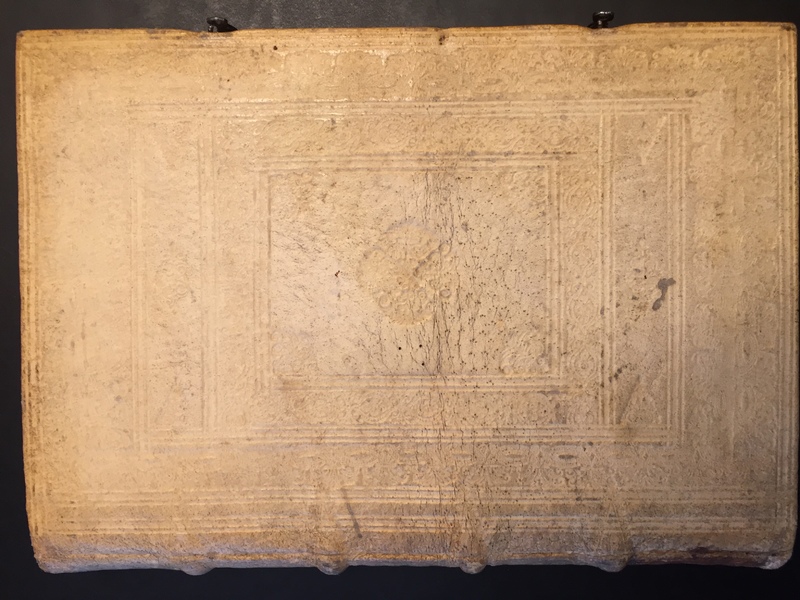
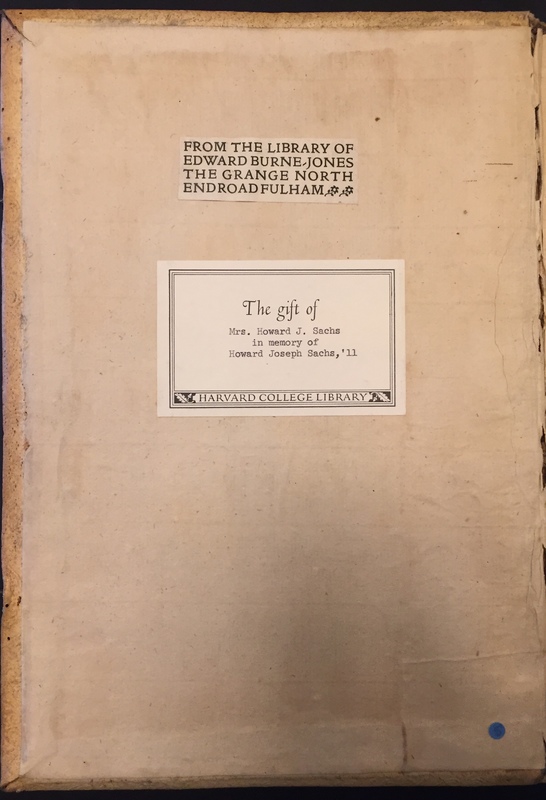
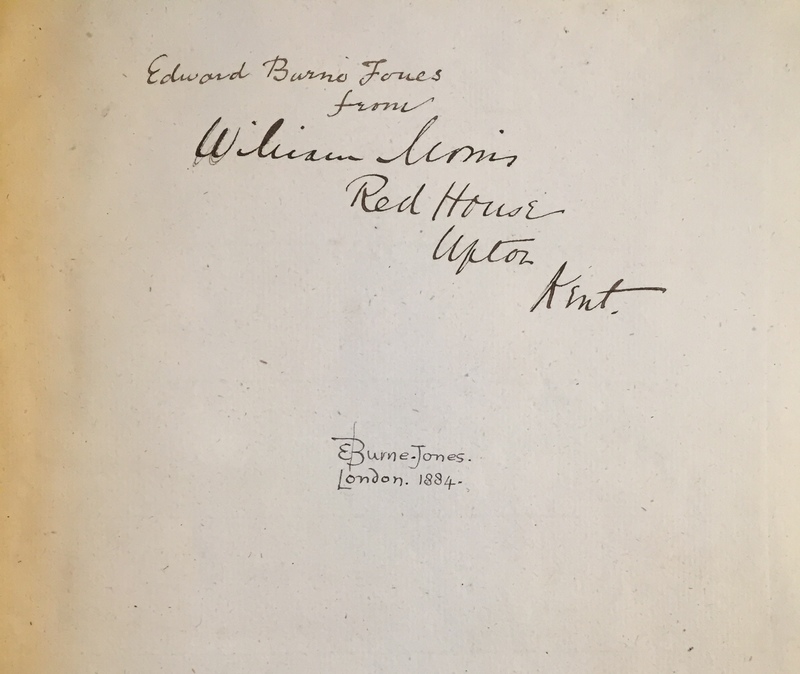
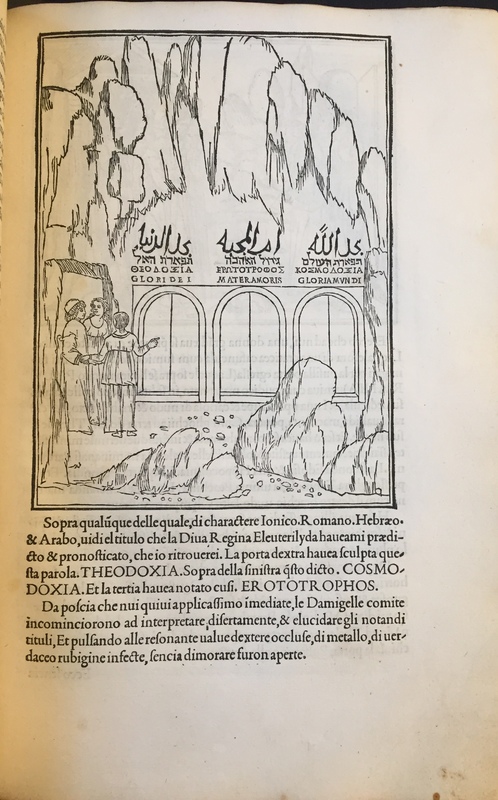
A very beautiful late incunabulum from the Venetian master printer, this particular volume of the Hypnerotomachia Poliphili (Typ Inc 5574) was given by William Morris to Edward Burne-Jones, which makes in invaluable to understanding the aesthetic relationship between Morris’ typography and Jones’ illustrations. This volume is in a contemporary full, tooled pigskin binding with clasps and closely resembles the Doves’ binding of the vellum Kelmscott Chaucer. Although none of the illustrations from HP have a direct descendant on any of Edward Burne-Jone's illustrations in the Kelmscott Chaucer (from my analyzation, at least), the integration of text and image in HP was revolutionary for its time in this history of printing and helped pave the way for William Morris' later typgraphic illustrations. Printed by the great Venician printer Aldus Manutius in 1499, this volume was likely an exemplar early in Morris' career as a printer (this work was gifted during or before 1884) for what he later hoped to achieve. The work was also indirectly influential on Edward Burne-Jone's book illustrations, for his woodcuts for the Kelmscott Chaucer are often only vaguely depicting the scenes from Chaucer's writings and, like the HP, have an other-worldy quality to them. Compare, for example, the way Chaucer is illustrated showing his son how to use an astrolabe in the seventh photo to the left to the illustration from the HP (fourth photo on the left). Each character is shown engaged in a foriegn landscape learning a subject foreign to them. With the integration text and image within the HP and its pigskin binding, it is easy to see how this attractive work was influential on William Morris and Edward Burne-Jones.
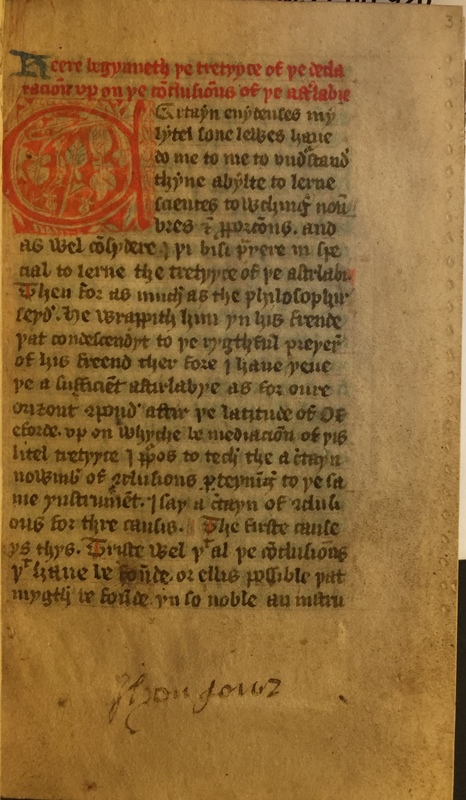
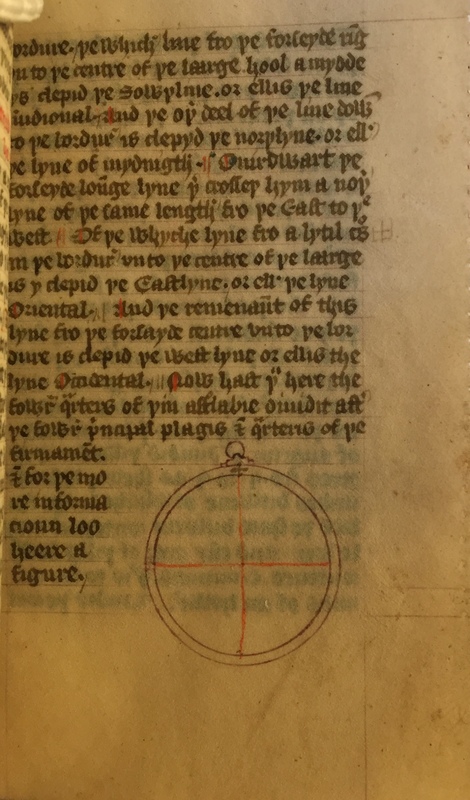
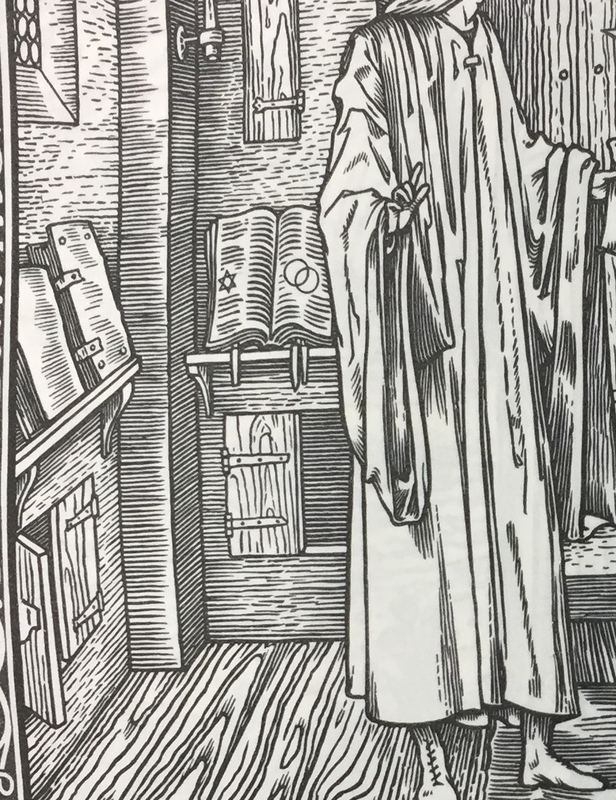
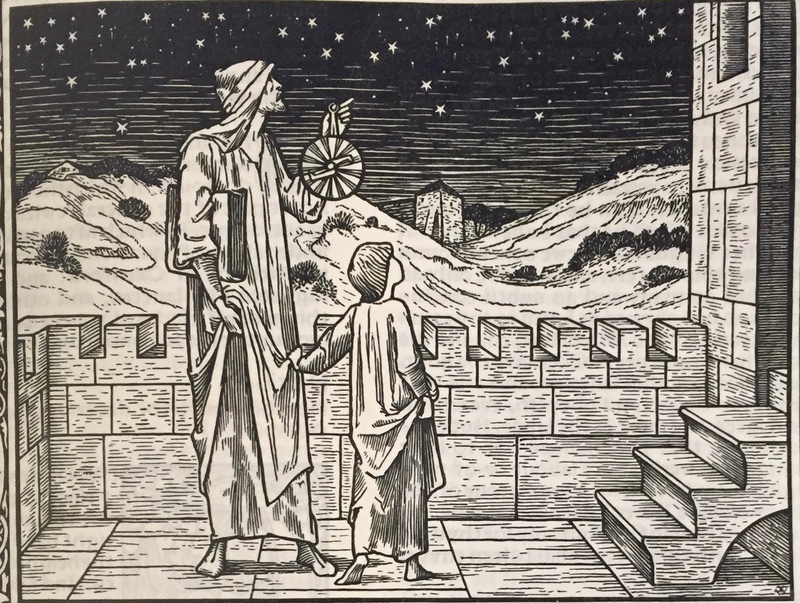
Houghton's manuscript of Chaucer's Trietiste on the Astrolabe is one of the few surviving manuscript copies of the work before it was printed in the late 15th century by William Caxton. The manuscript is written on vellum, and the scribe makes use of red, blue, and black inks for the work. Like William Morris's rendition in the Kelmscott Chaucer, the work is mostly written in black ink with the section headings being prited on vellum. Unlike the highly finished vellum surface of the Kelmscott Chaucer, the 1400 copy the Trietiste written on a rough vellum that is toothy and has several holes in the margins of the texts. While one might be inclinded to attribute these imperfections to the age of the manuscript and production techniques available at the time, the reader will note that many Italian humanist manuscripts contemporary to this English one were written on vellum equal or superior to the vellum used by William Morris. Edward Burne-Jones depicts an astrolabe at the begining of the same work in the Kelmscott Chaucer. However, his astrolabe is far more decrotive than the didactic one shown in the manuscript. Additionally, in an illustration of The Franklin's Tale, Burne-Jones includes several tomes bound in pigskin with clasps, and one of the volumes is opened to a page with a stylized stare and two cocentric circles. This illustration closely resembles the depiction of the astrolabe in this manuscript, and the book depicted is likely a work on astronomy (possibly even the Trietiste). Furthermore, the manuscript's hand was an influence on black-face English typography in the late 15th and early 16th centuries, which Morris conciouslly imitated in the Kelmscott Chaucer.
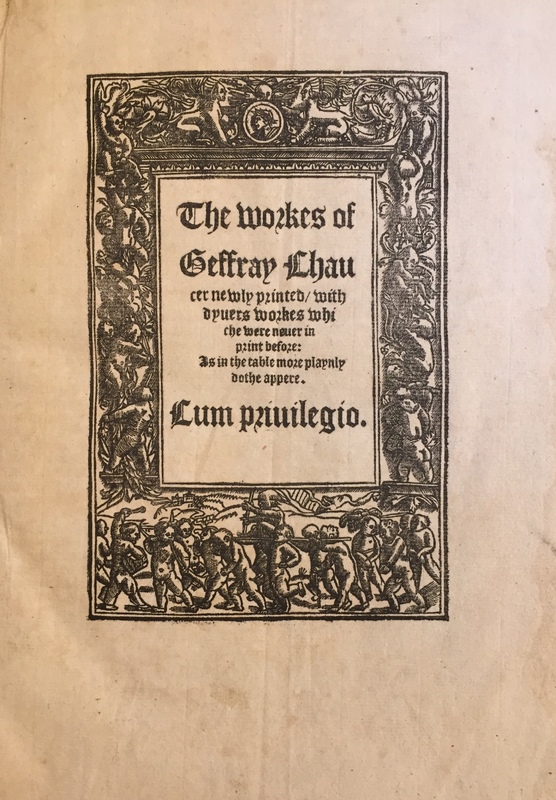
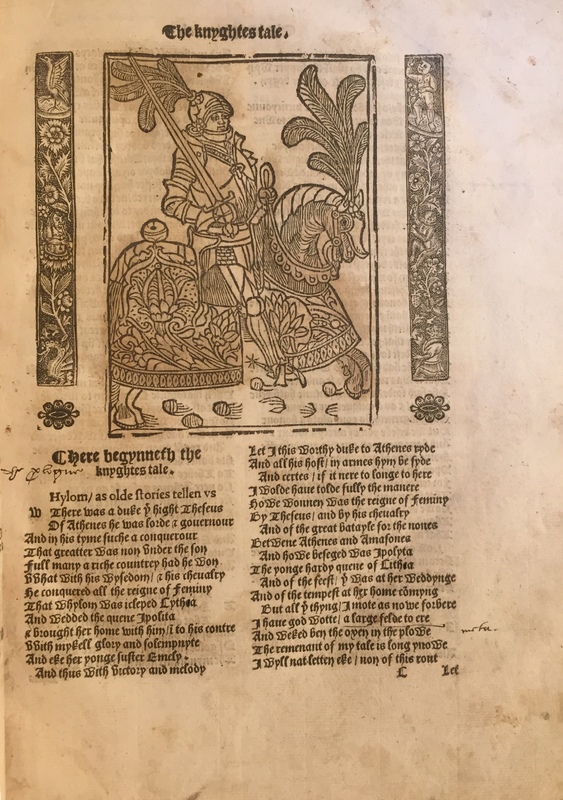
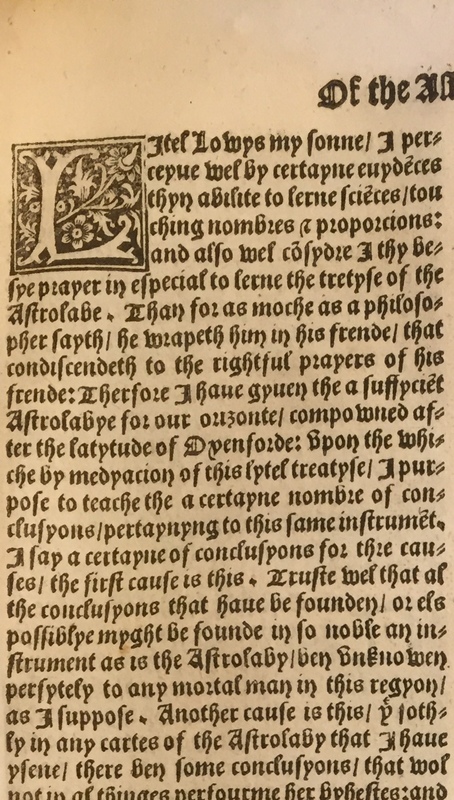
While not the Caxton editio princeps of Chaucer, this 1532 printing closely approximates the early English typography employed for the printing of Chaucer's works. The title page is decorated with a heavy border, but the text and illustrations are not integrated as in the Kelmscott Chaucer. The book is, I believe, only the second time that Chaucer's collected works were printed, with the first being seven years earlier in 1526 by Richarde Pynson also in London. The early black-letter typeface is even more closely modeled on the scribal hand of the 1400 Chaucer manuscript than William Morris' typeface. While many of the tales and separate works within the book have illustrations, none are as elaborate as those found in the Kelmscott Chaucer and none have borders as heavy as those designed by Morris. The 1532 folio uses two-column printing as does the Kelmscott Chaucer, but this differs from the single-column textblock of the 1400 manuscript, which is likely due to its small size and the scribe's desire to conserve valuable vellum. However, the 1400 manuscript, 1532 printed edition, and the Kelmscott Chaucer all employ a woodcut initia (or illuminated initial, in the case of the manuscriptl at the begining of the Trietiste on the Astrolabe. This illustrates how Morris' efforts to mimic medieval manuscripts were also present in the work of early English printers.