Material Bibliography
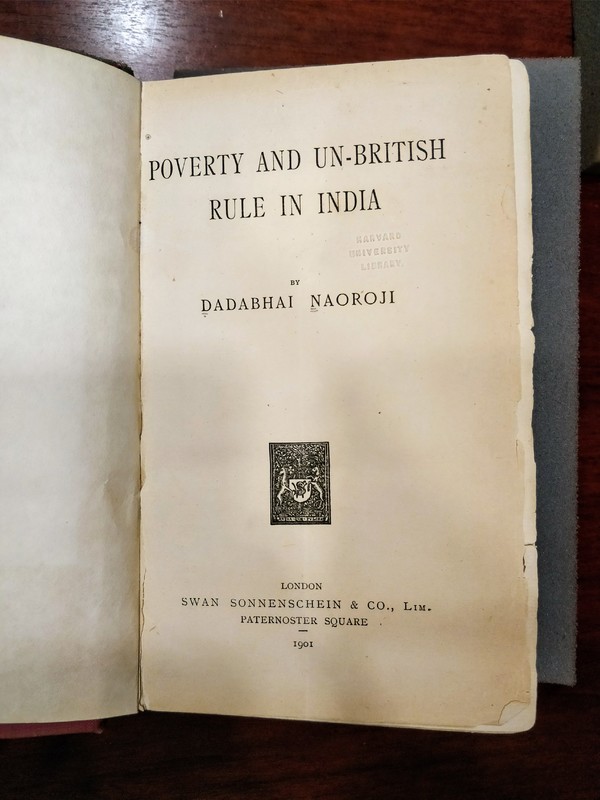
Poverty and Un-British Rule in India was published in 1901 in London by Swan Sonnenschein & Co. It's author, Dadabhai Naoroji, was a former Liberal member of parliament, founder and some-time president of the Indian National Congress, and merchant. At the time of writing he was living in Britain.
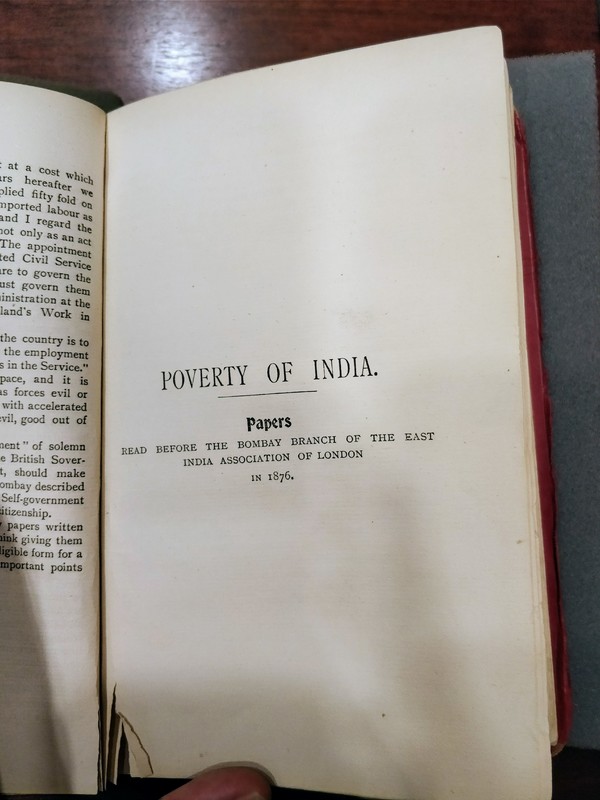
The book consists of a long essay "The Poverty of India" which Naoroji had presented at the East India Association in Bombay in 1876 and which had been published in London in 1886; Naoroji's reports to the British government on "The Condition of India" in the 1870s; his responses to papers written by M.E. Grant Duff (a former governor of Madras) in the 1880s' a collection of his speeches in parliament; his statements to the Royal Commission on the Administration of Expenditure in India from 1896 to 1898; and lastly some of his speeches at meetings in Britain, reprinted from the journal of the British committee of the INC.
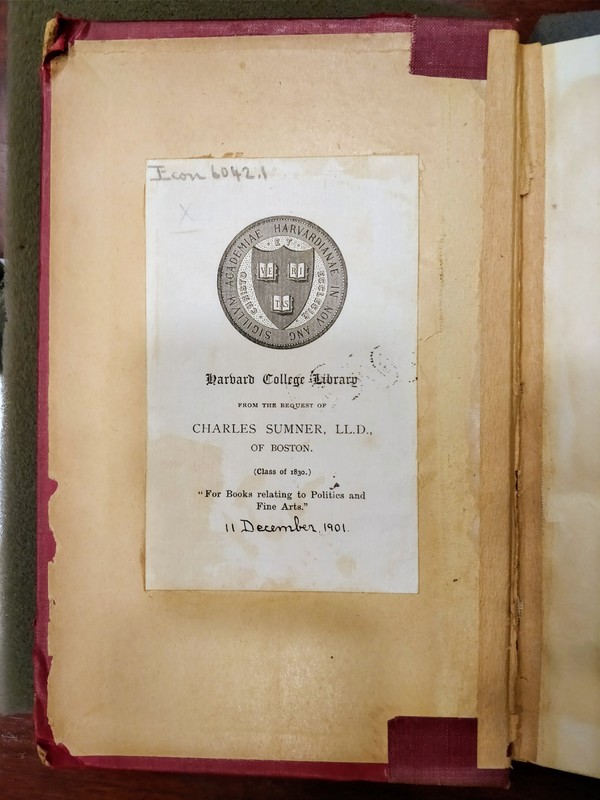
There is relatively little paratext: a title page, a list of contents, a short introduction reminding the (presumably British) reader of the pledges of British officials to govern India equitably, and the horrific poverty of India that (presumably) has emerged from deviating from these pledges. Various sections have title pages, though the one for "Poverty of India" is the most ornate, featuring more than one typeface. There is also an index at the back (unlike the 1886 Poverty of India). The book is conventionally paginated, and in very poor condition. This may be because it has been extensively used in Harvard's libraries, which is plausible as Naoroji's view of the economic consequences of British rule has not so much been debunked as added to, or it may be because the quality of the printing and binding was very poor, perhaps to make the book cheaper. Certainly the copy in Harvard's library has been rebound, though it is unclear when.