Material Bibliograrphy
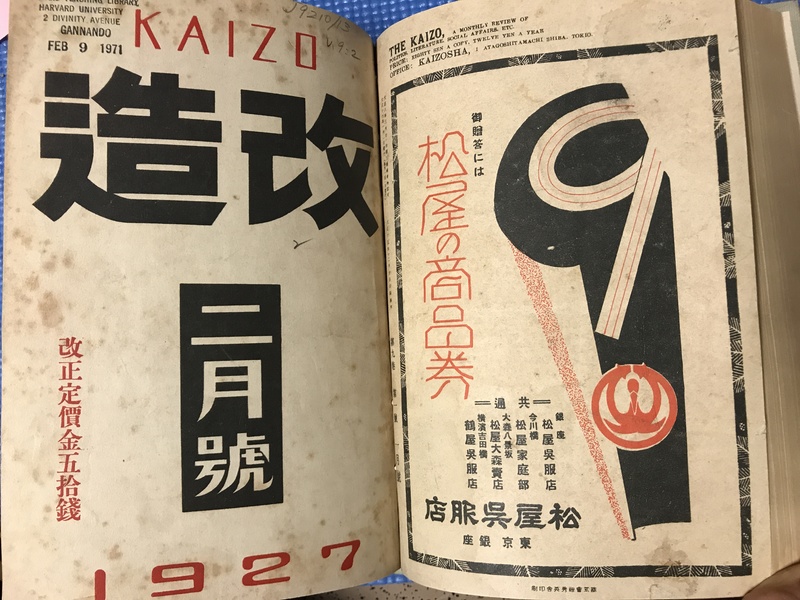

Kaizo (改造) the magazine started publication in 1919 when mass media, especially periodical press, had became prevalent in Japan. Exclusively funded by Yamamoto Sanehiko, it was initially intended to gain a wide readership and build up a reputation for his political election. Nevertheless, it later became one of the leading general-interest magazines in early twentieth century due to its successful editorial and marketing strategies. The publishing house Kaizosha and the printer Shueisha were both based in Tokyo and burnt down in the 1923 Great Kanto Earthquake, which led to the suspension of its publication for a few months in 1923-1924. Despite that, a few issues were forbidden from publishing due to the censorship, indicating by a stamp of the office of censorship on the cover.
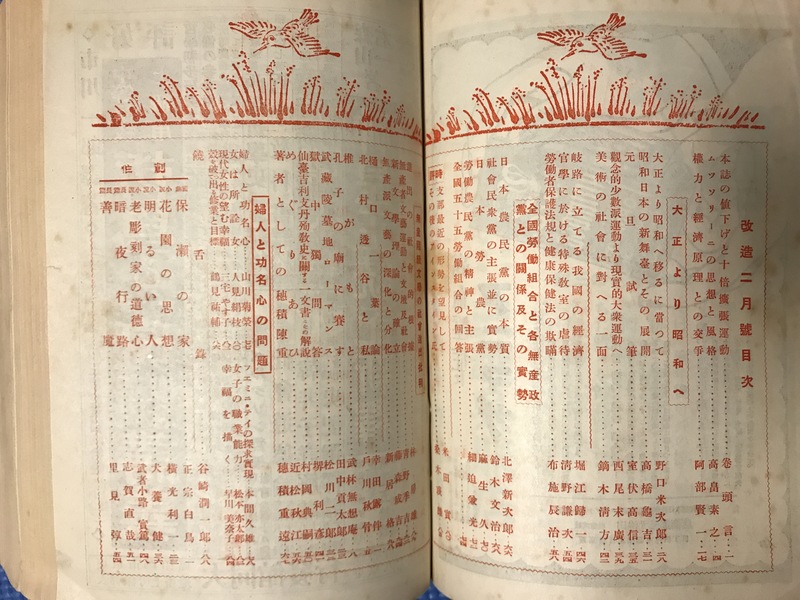
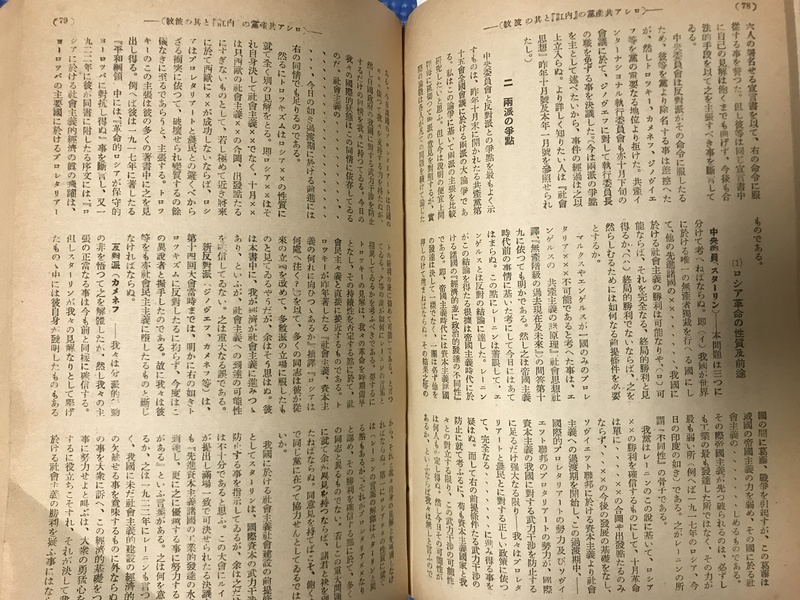
The general format of Kaizo has been maintained throughout its lifetime despite several revisions regarding design and compilation. The design of its cover resembles that of The Central Review, an older, more influential magazine before its publication. The name of the magazine in kanji is printed in boldface, atop which is “THE RECONSTRUCTION” (the direct translation of its name in English, later replaced by “KAIZO”) in red. For some issues, keywords regarding the content or specific themes would also be printed below. The table of contents is in red with an illustration of flying birds at the top and markers to indicate three separate columns including feature articles, essays and comments, literature. Before the actual content of each column are a few pages of advertisements, adding up to one single issue as long as about 300 pages in medium octavo. Apart from feature articles which usually appeal to intellectuals, the other columns print kana alongside kanji to show the letter’s readings, as an effort to serve lower-class readers. In order to cut down the cost of paper, each page of the issues after 1927 is jammed in two or three columns in 23 or 25 lines and leaves the margin extremely narrow.