Reception History
There are no obvious marks of ownership and reader engagement within the issues of the magazine published from 1919 to 1924 (as far as I have skimmed). Harvard-Yenching library own two collections of the magazine in paper and microfilm version. The library stamps indicate that the former has been acquired in 1971 and the latter is a duplicate of the collection owned by Kyoto Women University in 1981. These copies presumably have entered the universities as a whole collection retained by the publisher or related staff, where the issues that were prohibited from publication are included as well. Since my main purpose is to understand the market and readership of the magazine when it has been publishing in the early twentieth century, I will focus on the textual evidence of the target audience and other personal records indicating its reception at the time.
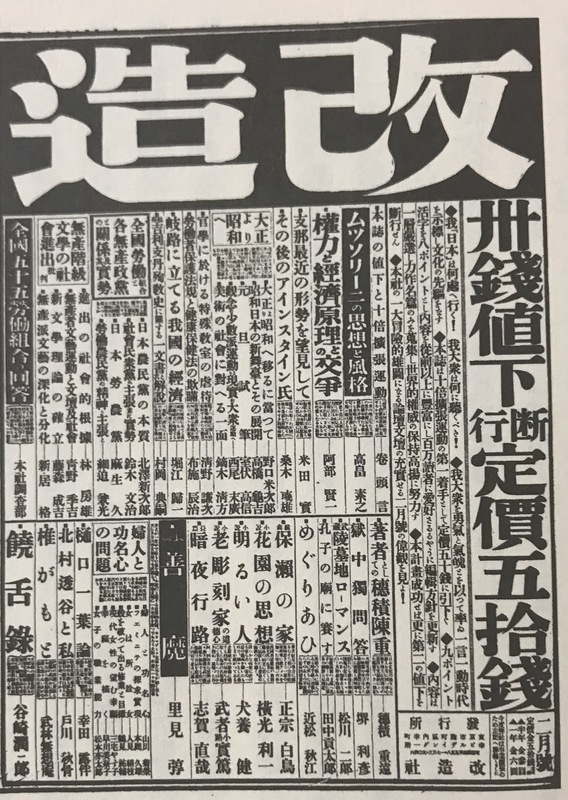
Both the advertisements of and within the magazine help to portray its target audience. Its ads on other newspapers, together with the part of Words from Editors inside the back cover page, present a shifting appeal for the readers. During the early 1920s, the catch phrases frequently used were “the leader of the highbrow magazines”, “the best friend of intellectual”, etc. Starting from the late 1920s, however, one can observe an increasing reference to “the general public (民衆)” and “the masses (大衆)” within these texts as its readers along with several campaigns of the publishing house to cut the price of its publications.
A similar shift also appears in the advertisements within the magazine, especially those for commodities and services. One significant type of ads on the early issues is for stationeries of high quality, such as notebook, fountain pen, etc. Considering both their usage and price, the ads would have aimed at people from middle and high class, in particular, the intellectuals. Later issues notably put on more ads of commodities for the commoners, such as popular soft drink, medicine for quick smoking cessation, etc. New ads for clinics and popular dramas also appears in this period and usually right before the second and third column of social comments and literature, respectively. As mentioned before, the target audience are readers from lower class at large, whereas the first column of featured articles in many ways was intended for better-educated intellectuals.
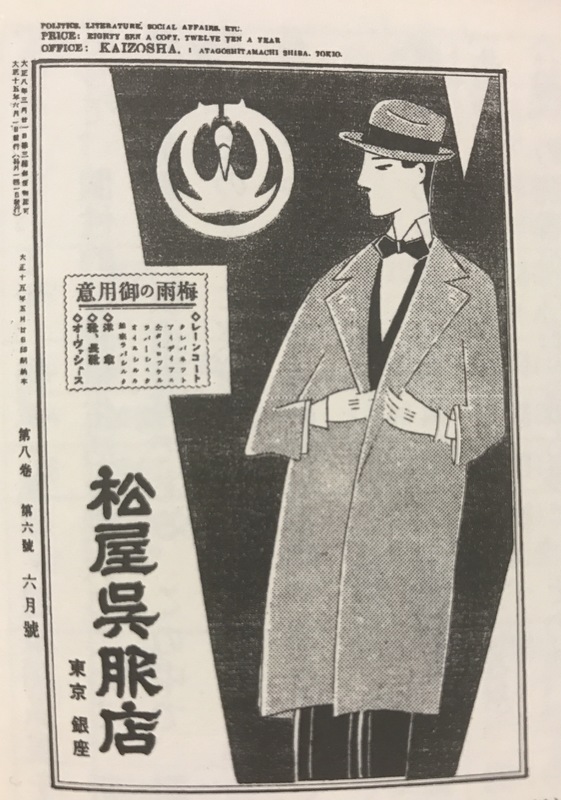
Nevertheless, the ads on the inside of cover page and the back cover are regularly for the Matsuya and the Mitsukoshi department stores of clothes, featuring a figure of a salaryman in a proper outfit changing according to the season. This is a typical image of the “new middle class” formed in the early twentieth century in Japan, who constituted a large part of the magazine’s readership throughout its publication. The ads of salaryman were not only for those who have been at work, but also for the students who would be graduated and potentially searching for such job. Mitsushima, an editor of the magazine recalled his student life in Waseda University, a most prestigious university in Japan, that “Kaizo was the first choice and most popular one among his cohort who got interested in socialism”.[1]
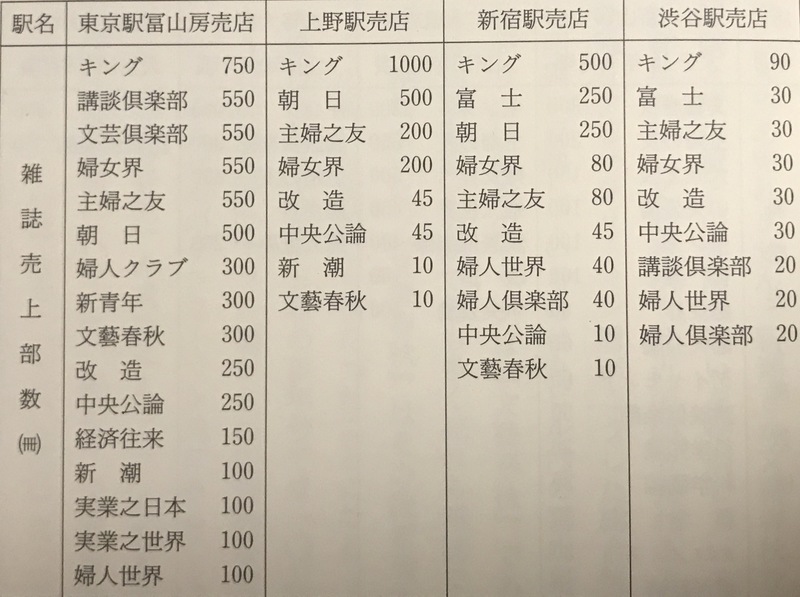
To be sure, Kaizo was still not as competitive as the popular magazines at the time in terms of the sales. But in its proposed category of “highbrow magazine” or “intellectual magazine”, its competition with Chuokoron 中央公論, a widely accepted leading magainze till now in Japan, was too close to call. A record of the sales of major magazines in four station stores in Tokyo shows that both have sold almost the same number of copies, which are relatively higher of other magazines of this kind. As for contributors, it became a platform where one could make his name through a single publication. It is recalled that Sato Haruo, who was already a well-known writer alongside Tanizaki Junichiro and Akutagawa Ryunosuke, took it as a career goal to get his works published at Kaizo and Chuokoron.[2] Besides, an interview of a “magazines reading-in-turns group”, a cooperative which provided the service of lending one magazine to its members who paid 1 yen per month in Tokyo, shows that Kaizo, together with Chuokoron and others of its category, ranked second in the request of its urban labor members.[3] This is an evidence that the magazine owned certain popularity among readers from the lower class, which may not be indicated directly by its sales or ownership.